The Limits of AI in Shipping Logistics — and Why Human Expertise Still Matters
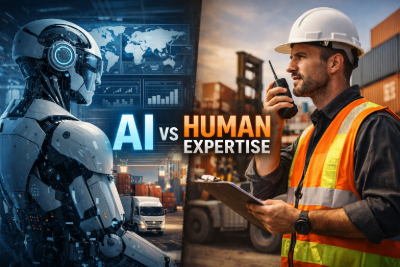
Artificial intelligence is everywhere in logistics marketing. Promises of fully automated supply chains,
instant problem-solving, and frictionless shipping are now common talking points across the industry.
But many shippers have discovered a different reality.
While AI has value in logistics, it also has clear limitations—and when those limitations show up, they often appear at the worst possible time: during delays, disruptions, and high-stakes shipments moving through Southern California ports, Las Vegas distribution lanes, and Salt Lake City regional networks.
Understanding what AI cannot do is just as important as understanding what it can.
At RZ Logistics, we operate in the space between technology and real-world execution—where experience, accountability, and relationships still determine outcomes, especially across high-volume Western U.S. lanes.
The Real Pain Points of AI in Logistics
AI works best in controlled, predictable environments. Logistics rarely fits that description—particularly on lanes such as Los Angeles to Las Vegas, Southern California to Salt Lake City, and other intermountain West corridors where congestion, weather, and capacity volatility are common.
1. AI Struggles When Conditions Change
AI systems depend on historical data and patterns. When conditions shift suddenly, those models break down.
- Weather disruptions across mountain passes into Utah
- Port congestion at Los Angeles and Long Beach
- Labor shortages or strikes
- Equipment imbalances between coastal and inland markets
- Regulatory or compliance changes
In these situations, AI can identify that a problem exists—but it often cannot determine the best solution for the specific shipment or lane.
Pain for shippers:
Delays with no clear path forward, automated alerts without action, and decisions that ignore real-world
constraints—such as limited outbound capacity from Southern California or tight Las Vegas delivery windows.
Why RZ Logistics is different:
Our team actively manages changing conditions across Los Angeles, Las Vegas, and Salt Lake City lanes,
communicates directly with carriers, and makes judgment calls that protect shipment timelines.
2. AI Cannot Replace Accountability
When something goes wrong, shippers don’t want dashboards—they want answers.
AI-driven platforms often surface alerts without ownership, route issues through ticket systems, or provide generic responses instead of lane-specific solutions.
Pain for shippers:
No single point of accountability, slow escalation, and frustration during time-sensitive shipments—
especially for retail, tradeshow, or deadline-driven freight into Las Vegas or Salt Lake City.
Why RZ Logistics is different:
You work with real logistics professionals who take responsibility for your freight and communicate directly
when issues arise.
3. AI Doesn’t Understand Relationships
Logistics is built on carrier partnerships, warehouse coordination, and long-term trust.
AI cannot negotiate capacity, secure last-minute equipment, or leverage carrier relationships during tight markets—particularly across Southern California and intermountain West corridors.
Why RZ Logistics is different:
Our carrier relationships across Los Angeles, Las Vegas, and Salt Lake City markets allow us to identify
solutions that algorithms cannot when capacity tightens.
4. AI Is Only as Good as the Data It Receives
Logistics data is often incomplete, fragmented, or inconsistent between partners.
AI systems assume the data is correct—even when it is not—leading to inaccurate ETAs and missed exceptions.
Why RZ Logistics is different:
We validate information, apply operational context, and use technology as a support tool—not a blind decision-maker.
5. AI Cannot Navigate Nuance or Gray Areas
Shipping logistics involves regulatory interpretation, special handling requirements, customer-specific constraints, and constant service-level tradeoffs.
These decisions—especially across diverse regional lanes—require experience, not rigid automation.
Where AI Does Fit — and How RZ Logistics Uses It
At RZ Logistics, we use AI and automation where they add real value, including visibility, tracking, exception detection, document processing, and data analysis.
Final decisions remain human-driven—especially when shipments are at risk.
Why Shippers Still Choose RZ Logistics
- Direct communication
- Clear accountability
- Proactive problem-solving
- Lane expertise across Los Angeles, Las Vegas, and Salt Lake City
- Technology used responsibly—not blindly
Final Thoughts
AI will continue to play an important role in shipping logistics—but it cannot replace experience, judgment, or accountability.
The most resilient supply chains are built on trusted logistics partners who understand both technology and real-world execution.
For more insights on modern freight management or to speak with our team, contact RZ Logistics.
RZ Logistics helps businesses build shipping strategies that prioritize transparency, reliability, and control—especially across critical Western U.S. lanes.